Smoothed Moving Average
The Smoothed Moving Average (SMMA) Indicator is an advanced technical analysis tool that helps traders identify trends by providing a smoother representation of price movements. Unlike the Simple Moving Average (SMA), the SMMA uses a modified calculation to reduce lag and provide more responsive signals.
What is a Smoothed Moving Average (SMMA)?
The Smoothed Moving Average (SMMA) is a variation of the traditional moving average that emphasizes longer-term trends. It smooths out price fluctuations over a specified period by giving equal weight to all prices, which helps reduce noise and provides a clearer trend direction.
Key Features:
- Trend Identification: The SMMA helps traders identify the overall trend direction with less lag compared to traditional moving averages.
- Smoothing Effect: By averaging prices over a specified period, the SMMA reduces market noise, allowing for clearer signals.
- Customizable Periods: Traders can choose different periods based on their trading strategies, such as short-term or long-term analysis.
SMMA Formula:
The formula for calculating the Smoothed Moving Average is:
- For the first period:
- For subsequent periods:
Where:
- = Number of periods
- = Current time period
How to Add the SMMA Indicator
-
Open the platform:
- Navigate to the platform and select the asset you wish to analyse.
-
Access the Indicators Menu:
- Click on the Indicators menu located in the top toolbar.
-
Add the SMMA Indicator:
- Search for “Smoothed Moving Average” or “SMMA” in the indicators search bar.
- Click on the SMMA Indicator to add it to your chart.
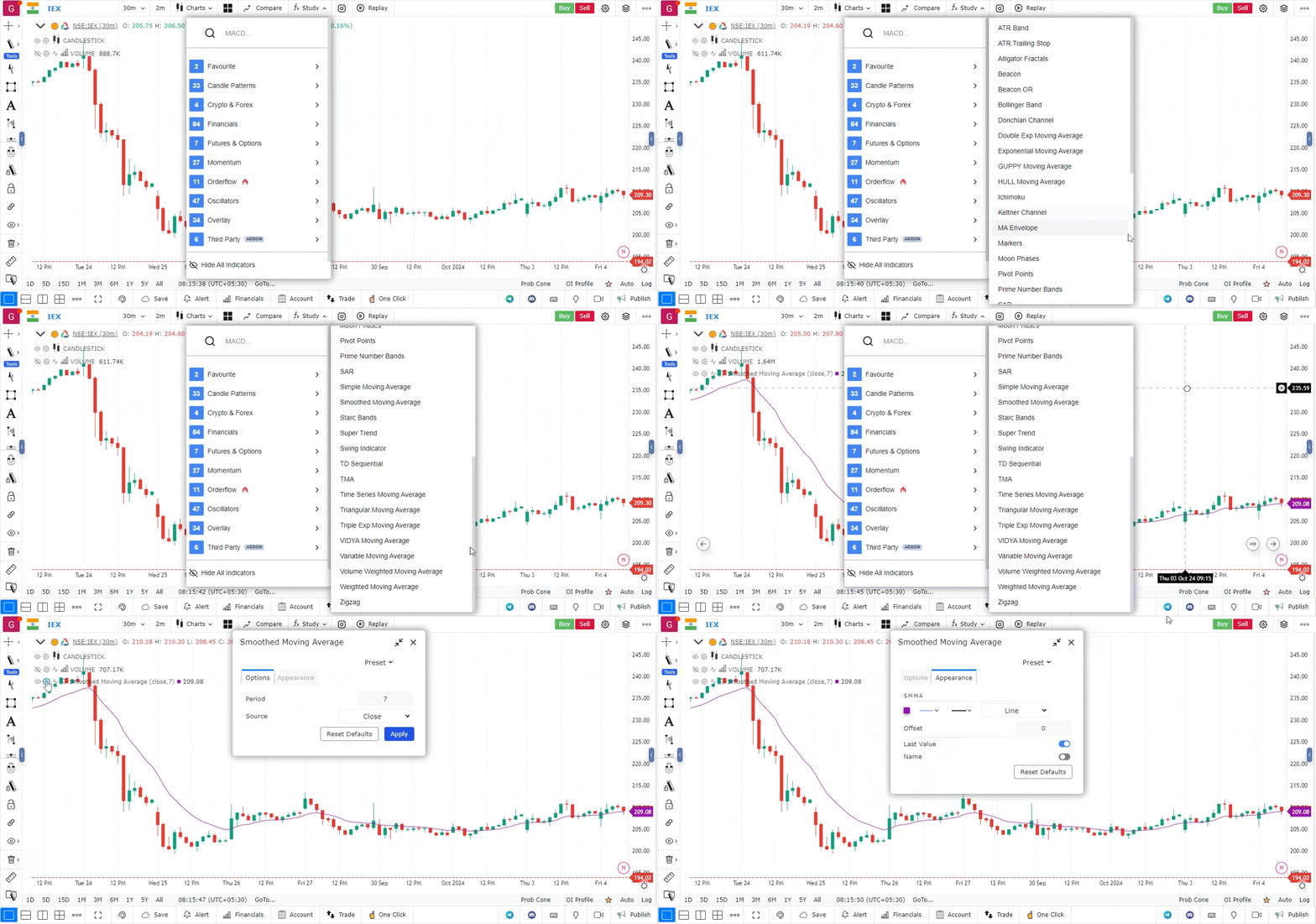
- Customize Settings:
- After adding the indicator, you can customize the following settings:
- Period: Select the number of periods for the SMMA (e.g., 10, 50, 100).
- Style: Adjust the colour, line thickness, and style (solid, dashed) for better visibility on your chart.
- After adding the indicator, you can customize the following settings:
How to Interpret the SMMA Indicator
-
Trend Direction:
- When the price is above the SMMA, it indicates a bullish trend, suggesting potential long positions.
- When the price is below the SMMA, it signifies a bearish trend, suggesting potential short positions.
-
Crossovers:
- Bullish Crossover: A shorter-term SMMA crossing above a longer-term SMMA may signal a bullish trend and potential buy opportunity.
- Bearish Crossover: A shorter-term SMMA crossing below a longer-term SMMA may signal a bearish trend and potential sell opportunity.
-
Support and Resistance:
- The SMMA can act as a dynamic support or resistance level. Traders may look for price reactions at the SMMA line, indicating potential reversals.
Use Case
The Smoothed Moving Average (SMMA) applies more smoothing than a simple EMA by using a longer effective period. It is ideal as a long-term trend filter that filters out short-term noise better than standard moving averages.
Strategy
Use SMMA as the primary trend filter on your chart. Only take long positions when price is above the SMMA and the SMMA is rising. In Alligator-based systems, the three Alligator lines are SMAs — use SMMA to align with its framework.
Common Mistakes
Do not use SMMA for short-term trading entries. Avoid expecting SMMA to be as responsive as an EMA. Do not change SMMA periods frequently; consistency is key to building a reliable system around it.