
Lipi — GoCharting's
Scripting Engine
Write custom indicators, strategy automations and data visualisations directly on the chart. Native access to orderflow metrics, COT data and a community of 7,000+ shared scripts.
Lipi is a powerful and flexible scripting language built directly into GoCharting. With access to orderflow metrics, COT data and a thriving community library, Lipi is the most capable scripting engine available in any web-based trading platform. No installs, no plugins — just open the Script Editor and start coding.
What You Can Build
Key Features
- ✓ Full API documentation with examples and code snippets
- ✓ Indicator-on-indicator support — chain multiple scripts together
- ✓ Plot shapes, labels, lines, filled areas and backgrounds from code
- ✓ Alert conditions defined in script — fires on chart or via notification
- ✓ Save and share scripts from the cloud — works across all devices
- ✓ Community support, self-help videos and guided tutorials
Learn & Reference
Community Scripts Showcase
Explore MoreDiscover what traders have built with Lipi. Browse all 7,000+ scripts
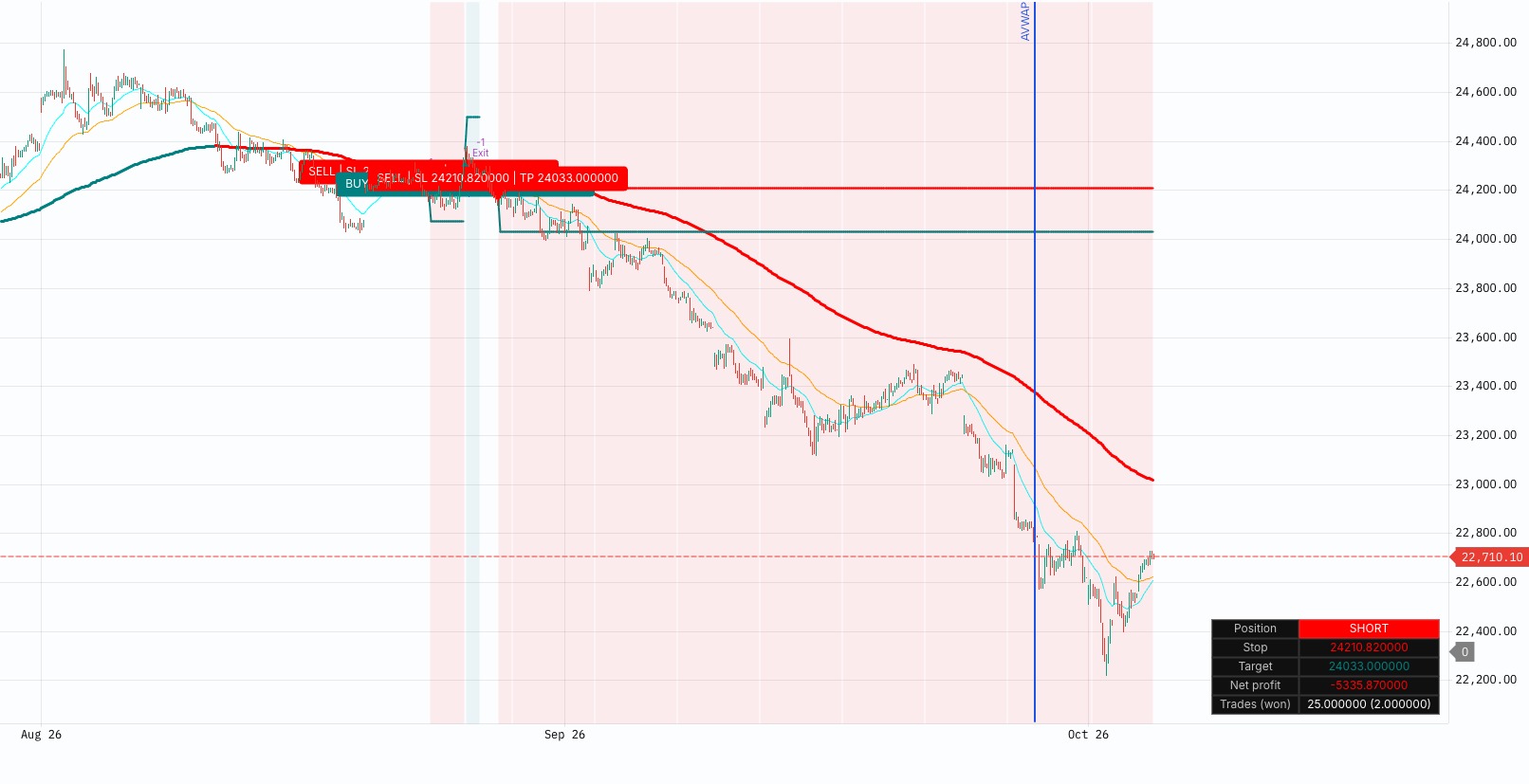
EMA Pullback Strategy
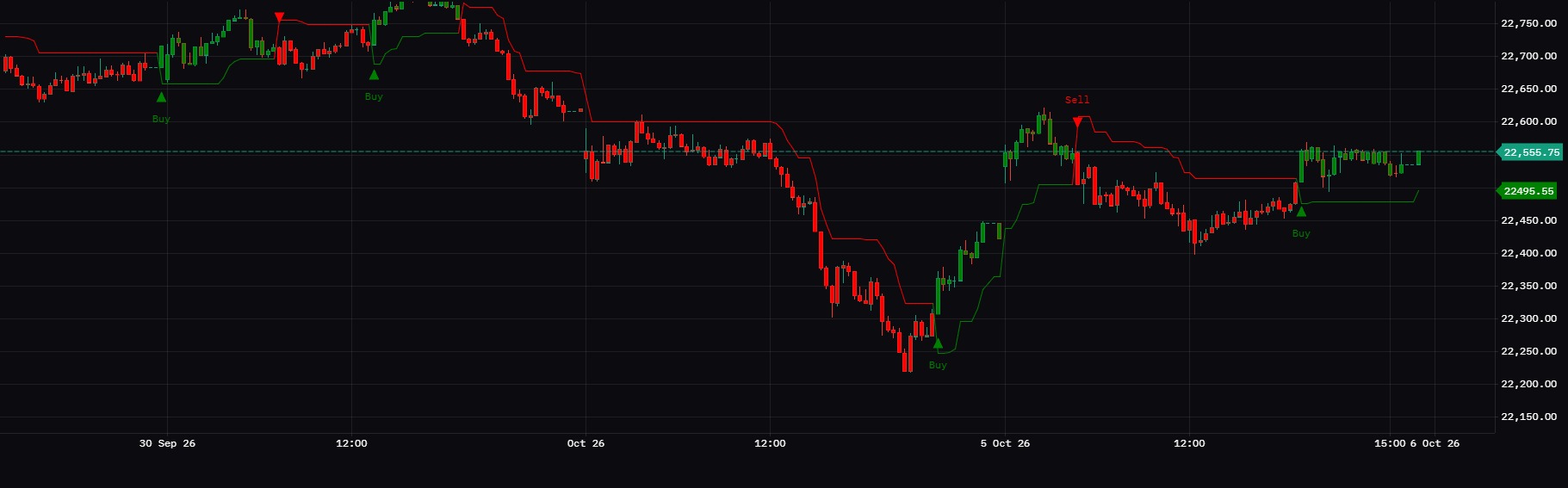
BUY SELL SIGNAL is a simple trend-following tool that plots a trailing stop line based on market volatility (ATR).
How to read it:
- Green line + Buy marker: price has closed above the stop, which suggests an uptrend.
- Red line + Sell marker: price has closed below the stop, which suggests a downtrend.
- Candles turn green or red to match the current trend.
Settings:
- Key Value: controls sensitivity. Higher values give fewer, slower signals. Lower values give more, faster signals.
- ATR Period: the volatility lookback (default 10).
Tips:
- It works best in trending markets and can give false signals in sideways ones.
- Confirm signals with support/resistance, volume, or a higher-timeframe trend.
- Adjust the settings to suit your symbol and timeframe. .
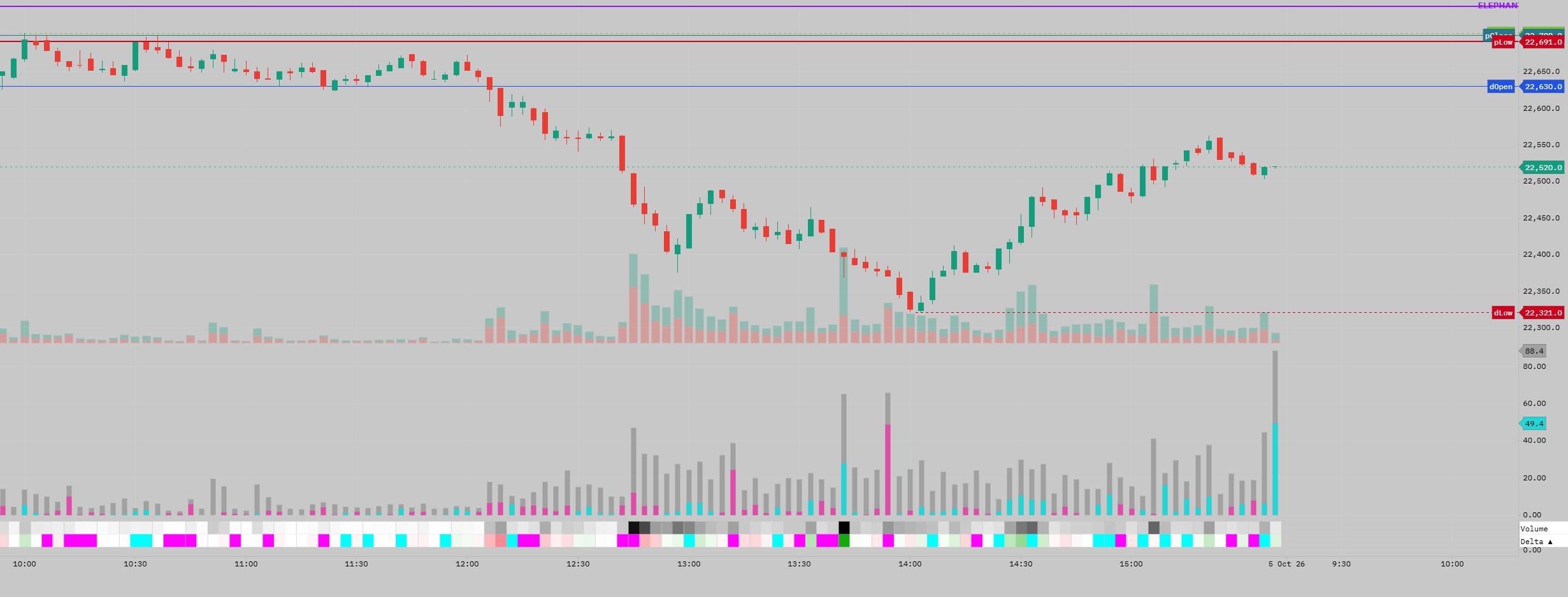
EVR | Effort vs Result
A simple order-flow indicator built around one question:
How much trading effort is required to produce the observed price movement?
EVR separates Total Effort from the Directional Effort generated by order-flow Delta.
EVR is not simply a volume indicator. It relates volume to the price range produced by that volume.
How it works
- Total Effort = Volume ÷ (High − Low)
- Directional Effort = |Delta| ÷ (High − Low)
- Delta Efficiency % = Directional Effort ÷ Total Effort = |Delta| ÷ Volume
The outer grey histogram represents Total Effort, while the inner turquoise/magenta histogram represents Directional Effort.
The relative size of the coloured portion within the Total Effort bar also provides a visual representation of Delta Efficiency.
A selectable Volume Base of 100 / 500 / 1K / 5K / 10K lets you adjust the numerical scale without changing the underlying relationship.
Meaning
- High EVR = relatively high effort (volume) is required to produce relatively little price movement.
- Low EVR = price is moving with relatively low effort (volume).
- Large coloured portion relative to the grey bar → high Delta Efficiency
- Small coloured portion relative to the grey bar → low Delta Efficiency
The three-layer interpretation
Bar height → Total Effort
Coloured bar height → Directional Effort
Coloured / total proportion → Delta Efficiency
High EVR
Price is expensive to move.
Then look at the coloured portion:
Large directional component
Much of the effort was one-sided.
Small directional component
Most of the effort was two-sided.
That combination is particularly revealing:
High EVR + small directional effort
→ Heavy fighting, churn, or conditions consistent with absorption.
High EVR + large directional effort
→ Strong aggression, but price is still expensive to move.
Low EVR + large directional effort
→ Efficient directional movement.
Low EVR + small directional effort
→ Price moving easily with relatively little directional commitment, potentially due to thin liquidity or a lack of opposing participation.
Two practical use cases
1. Deterioration after an extended move
When price has already travelled significantly and EVR suddenly rises, it means more effort is being required to produce further price movement.
This is not a reversal signal by itself, but it can be a useful risk-management cue to tighten stops and watch for confirmation such as CVD divergence or failure to extend.
2. Absorption and breakout quality
Around an important breakout level, high Total Effort with relatively little price progress can highlight conditions consistent with absorption.
This can occur just before the break, as aggressive participation struggles to push through the level, or immediately after the break, when heavy effort produces little follow-through.
A subsequent failure to extend can provide an early warning that the breakout is struggling to gain acceptance.
Conversely, a breakout with relatively low effort and strong directional effort suggests price is moving more easily.
EVR measures the effort. Price structure and other order-flow tools provide the context.
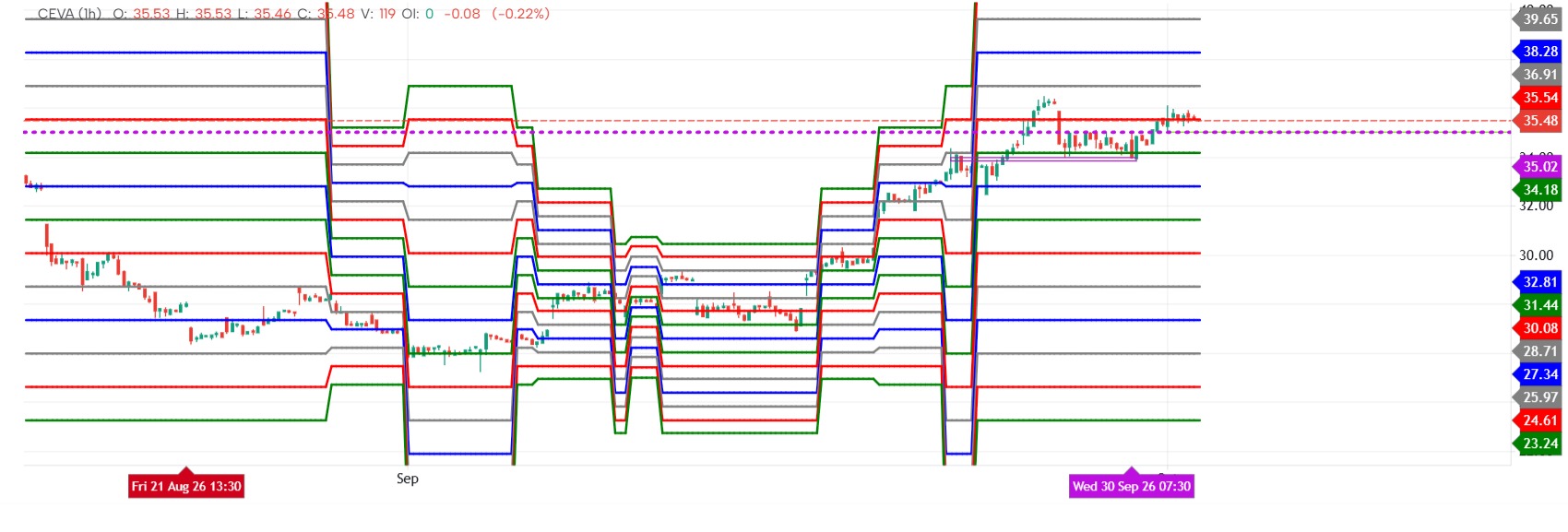
Murrey Math Lines (MML) are a technical analysis system developed by T.H. Murrey, based on the geometric and number theories of W.D. Gann. The system divides price action into an eight-part grid (or "octave") using 1/8th intervals to identify support, resistance, pivot points, and trend reversals.
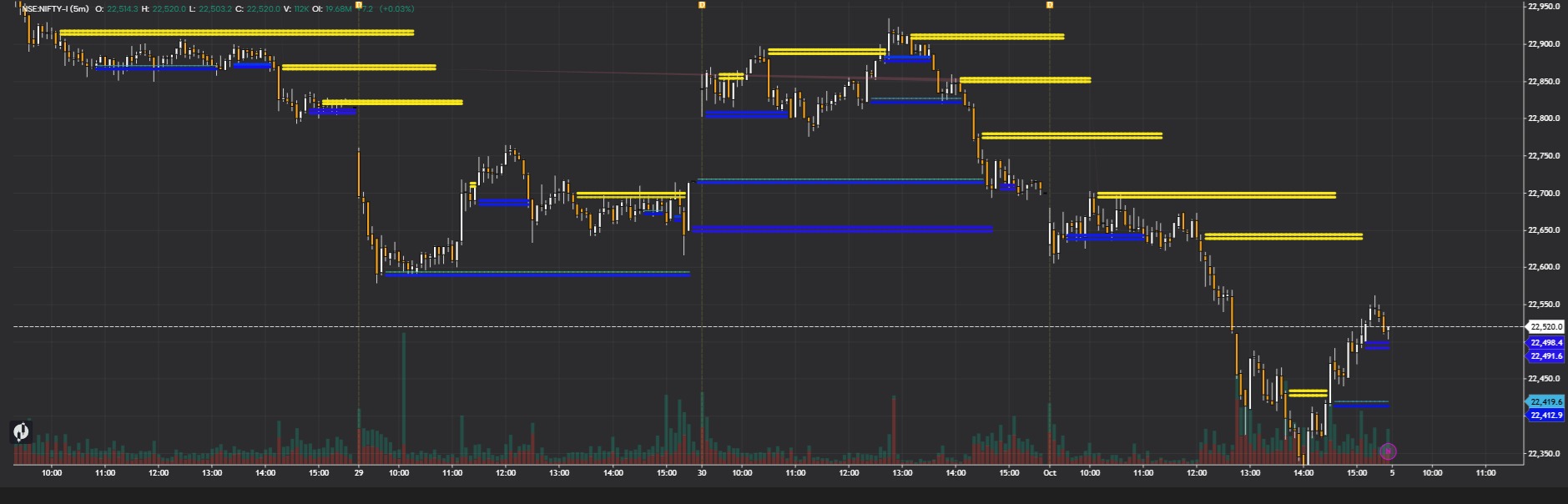
Karan highlights potential support and resistance zones using price structure and volume activity. It focuses on areas around previous swing highs, swing lows, and consolidation ranges where trading interest may be concentrated.
These zones help traders watch for price reactions, breakouts, retests, and possible liquidity sweeps. Treat them as areas of interest rather than guaranteed reversal levels.
Liquidity is inferred from price and volume patterns; the zones do not confirm the presence of resting orders.
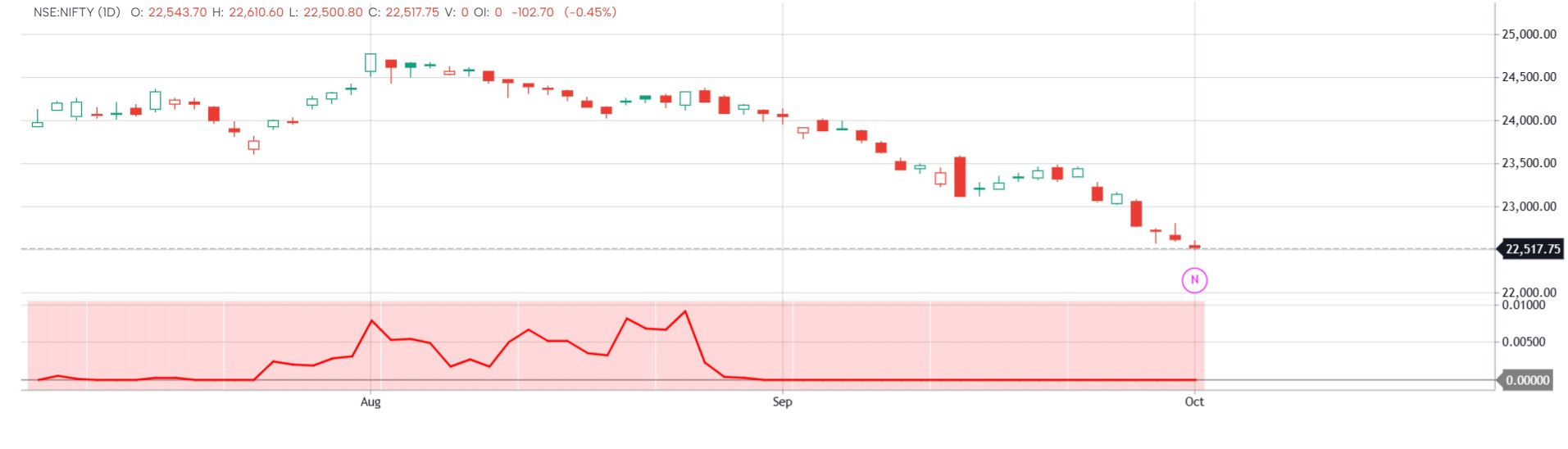
Smooth Structural Strength Score (SSSS)
Proprietary Market Leadership Model
Smooth
Structural Strength Score is a proprietary market leadership model designed to
identify securities exhibiting both strong long-term appreciation and efficient
directional behavior.
The indicator
is built on the premise that the strongest market leaders typically demonstrate
two characteristics:
1. Meaningful long-term price
advancement.
2. Consistent directional progress
with limited structural degradation.
Core
Framework
Long-Term
Performance Component
The model
evaluates annualized price advancement through a rolling weekly performance
framework.
This component
measures whether an asset has demonstrated sufficient long-term appreciation to
qualify as a potential leadership candidate. Securities lacking meaningful
long-term progress are naturally penalized regardless of short-term strength.
Directional
Efficiency Component
Price
appreciation alone does not necessarily indicate a healthy trend.
The indicator
therefore incorporates a proprietary efficiency factor designed to evaluate how
effectively price has progressed toward its current level.
Assets reaching
new highs through relatively organized and persistent directional movement
receive higher efficiency readings.
Assets reaching
similar returns through excessive volatility, repeated reversals, or unstable
price action receive lower efficiency readings.
Structural
Strength Score
The final score
is generated by combining long-term performance with directional efficiency.
This approach
seeks to identify securities that are not only appreciating but doing so
through stable and constructive market behavior.
As a result,
the model favors assets displaying characteristics commonly associated with
sustained leadership while filtering out many low-quality advances driven
primarily by short-term speculation or erratic movement.
What the
Indicator Shows
The indicator
classifies stocks into four categories:
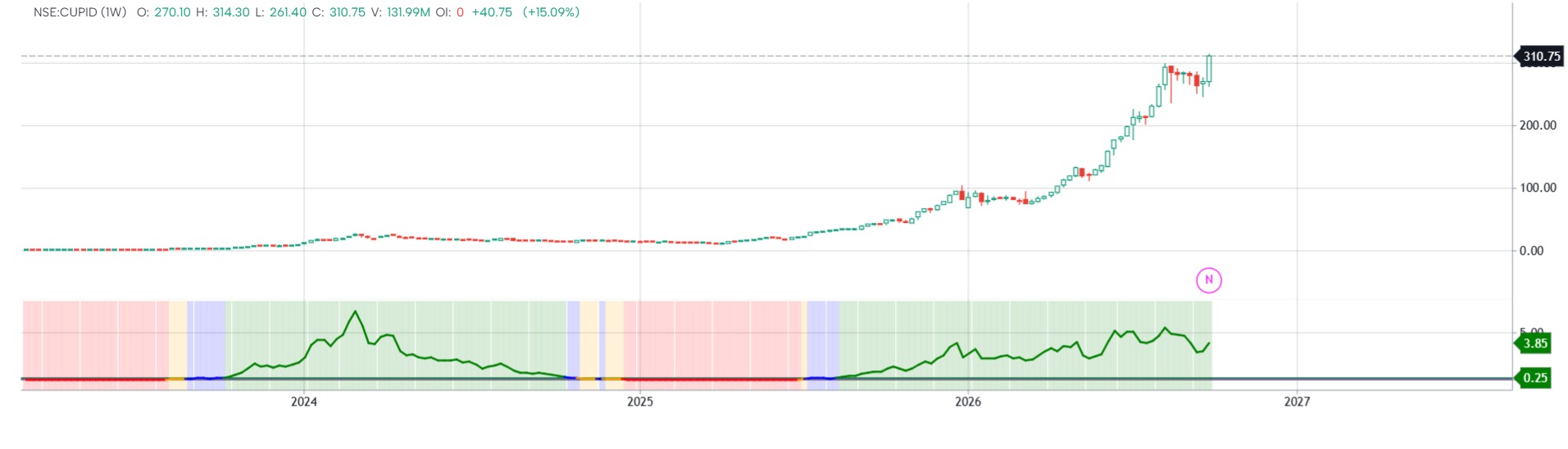
● Leadership Zone — Score Value > 0.25
Strongest stocks in the market.
Clear and sustained uptrends.
Potential candidates for position trading
and long-term trend following.
● Trend Zone — Score Value Between 0.15 to 0.25
Stocks with healthy upward momentum.
Positive trend structure remains intact.
Suitable for trend-following strategies.
● Choppy Zone — Score Value 0.05 to 0.15
Mixed or inconsistent price behaviour.
Lack of clear directional conviction.
Requires additional confirmation before
taking positions.
● Noise Zone — Score Value 0 to < 0.05
Weak market structure.
Lack of sustained trend.
Generally avoided by trend-following
investors.
How to Use
It
· Focus on stocks moving into the
Leadership or Trend zones.
· Continue holding positions
while the stock remains in a strong category.
· Use price action and risk
management tools to manage exits.
· Avoid making decisions solely
based on short-term market noise.
Key
Benefits
· Quickly identifies market
leaders
· Helps filter out weak and
sideways stocks
· Supports systematic stock
selection
· Useful for momentum and
trend-following investors
· Easy visual classification
using color-coded zones
Ideal For
· Position Traders
· Swing Traders
· Momentum Investors
· Portfolio Managers
· Relative Strength Investors
The objective
of the Structural Strength Score is simple: identify stocks exhibiting strong,
persistent trends and avoid stocks lacking clear direction.
4F indicator4F indicator4F indicator4F indicator4F indicator4F indicator4F indicator4F indicator4F indicator4F indicator4F indicator4F indicator4F indicator
![[IMBA] ALGO](https://gocharting.com/screenshots/0d865643-65ac-4492-9317-0d6297db707d.png)
[IMBA] ALGO is a market-analysis and trade-signal indicator designed to identify potential LONG and SHORT opportunities using dynamic sensitivity, price-channel analysis, and Fibonacci-based trend levels.
The indicator calculates a dynamic lookback based on the selected sensitivity and uses the highest/lowest price range to derive key Fibonacci levels (23.6%, 38.2%, 50%, 61.8%, and 78.6%). The 50% Fibonacci level is used as the primary IMBA trend line to help identify bullish and bearish market conditions.
Features include:
• Dynamic float-based sensitivity
• LONG and SHORT trend signals
• Entry, Stop Loss and TP1–TP4 levels
• Configurable TP percentages and partial allocations
• Break-Even target selection
• Fixed or Fibonacci-based Stop Loss
• Optional RSI confirmation signals
• TP, SL and Break-Even event markers
• Configurable risk and initial deposit settings
• Alert conditions for trade and target events
The indicator is intended as a market-analysis and signal-generation tool. Users should perform their own analysis and apply appropriate risk management before making trading decisions.
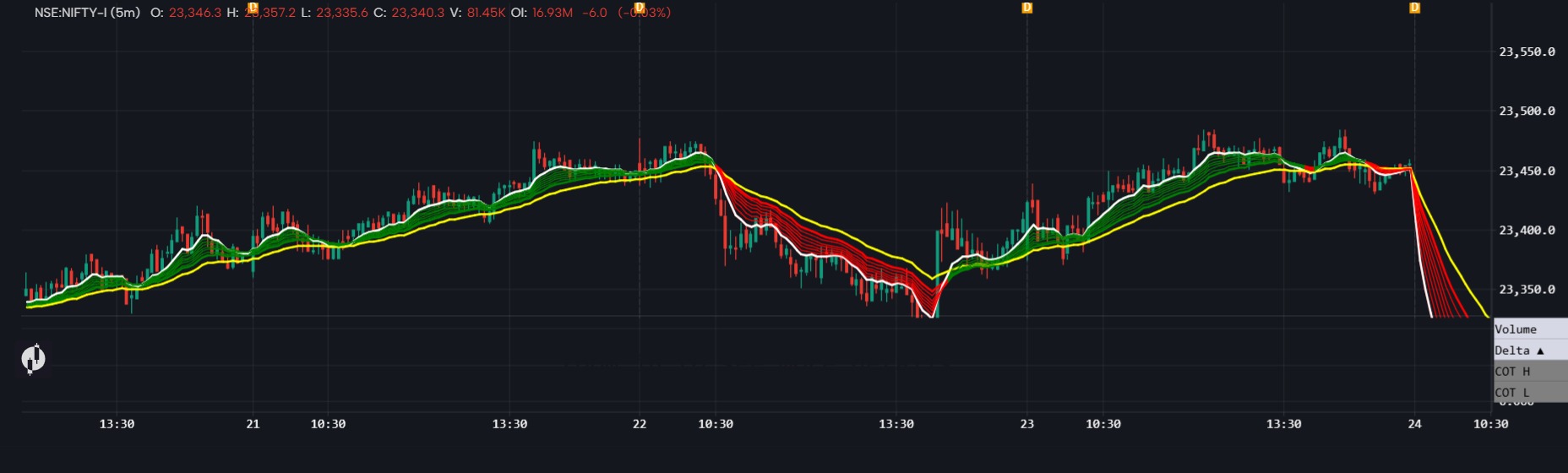
TrendPulse — Trend Identification Indicator
Developed with Level 2 Traders, TrendPulse is designed to help traders quickly identify market trends and potential trend changes.
Use TrendPulse alongside other confirmations or Level 2 strategies to strengthen your trade setups and filter opportunities based on market direction.
TrendPulse is a confirmation tool, not a standalone trading signal.
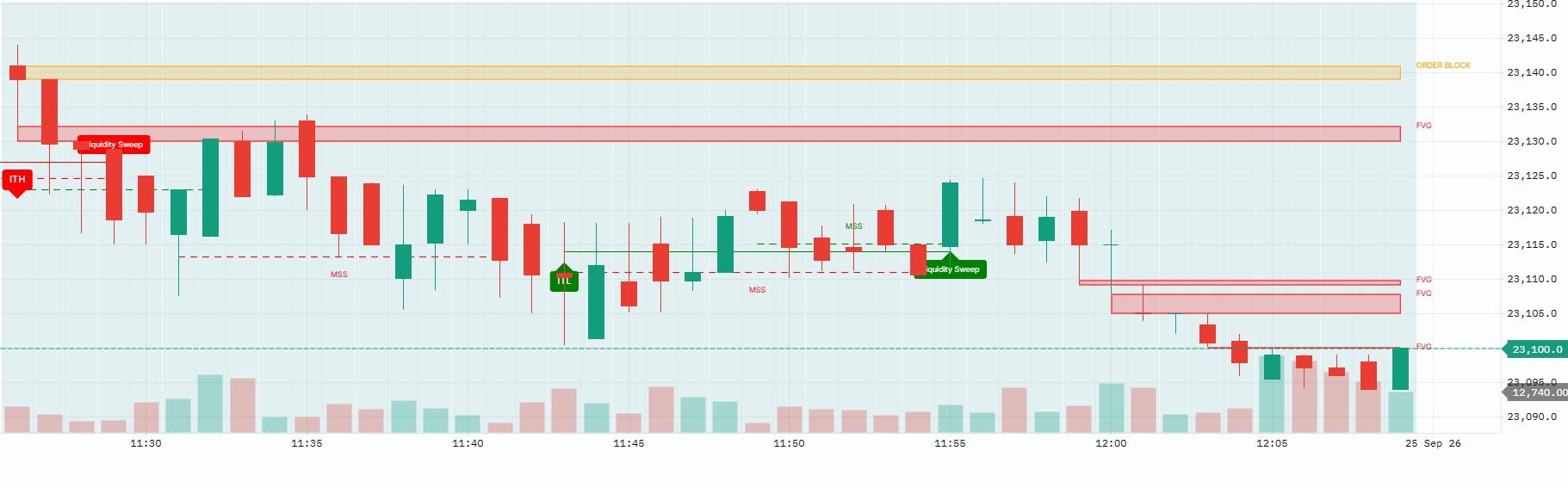
ICT SMC key Levels Execution is a complete Smart Money Concepts and ICT style market structure tool built to visually flag, in real time, the specific footprints that large institutional players are believed to leave on a price chart. This indicator was created because most retail price action is not random, it is a reaction to a small number of repeating institutional behaviors, and instead of forcing a trader to manually mark every swing high, every swing low, every unfilled gap, every institutional footprint candle and every stop hunt by hand, this tool automates the entire process and displays it directly on the chart as it happens. The goal is to give the trader one unified, layered view of structure, liquidity, imbalance and momentum, all working together as a single decision making framework rather than several separate indicators that do not talk to each other.
Supported Markets
Lipi scripts work across all GoCharting markets — NSE/BSE Futures & Options, CME Futures (/ES, /NQ, /CL, /GC), Forex & Crypto and Indian equities. Orderflow metrics (delta, buy/sell volume, OI) are available wherever the underlying data feed supports them.