On-Balance Volume
The On-Balance Volume (OBV) indicator is a momentum-based volume indicator that measures buying and selling pressure as a cumulative indicator. It helps traders identify the relationship between volume and price changes, providing insights into potential future price movements.
Overview of On-Balance Volume Indicator
Developed by Joe Granville, the OBV is based on the premise that volume precedes price movements. The indicator adds the day’s volume to the previous OBV when the price closes higher and subtracts the day’s volume when the price closes lower. This cumulative nature of the OBV makes it a useful tool for identifying potential trend reversals or confirmations.
Key Features of On-Balance Volume Indicator
- Cumulative Volume Analysis: The OBV takes into account volume changes and tracks them cumulatively, allowing traders to see the overall buying and selling pressure.
- Trend Confirmation: A rising OBV indicates that buyers are willing to step in, confirming a bullish trend, while a falling OBV suggests that sellers are gaining control, indicating a bearish trend.
- Divergence Signals: Traders can use divergence between the OBV and price action to identify potential trend reversals. For example, if prices are making new highs while OBV is declining, it may signal a weakening trend.
How to Use On-Balance Volume Indicator
- Open the platform:
- Log in to your account.
- Load the chart for the asset you wish to analyze.
- Select the Timeframe:
- Choose an appropriate timeframe for your analysis, such as daily, weekly, or intraday charts, depending on your trading strategy.
- Add the On-Balance Volume Indicator:
- Navigate to the Indicators section in the platform interface.
- Search for On-Balance Volume.
- Click to add the indicator to your chart, which will typically appear as a line graph below the price chart.
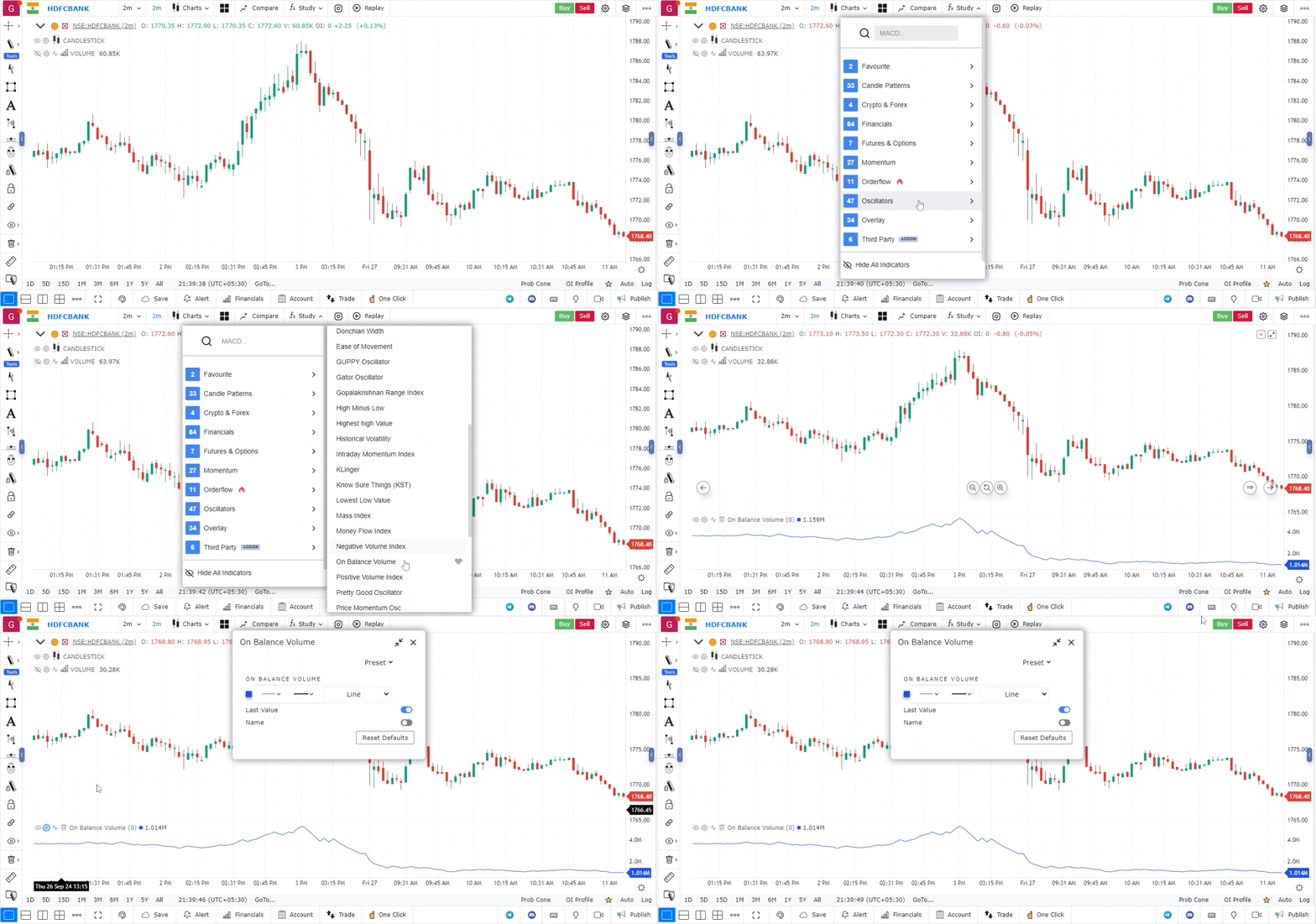
- Interpret the Indicator:
- The OBV line will rise or fall based on the closing prices and volume of the asset.
- A rising OBV indicates increasing buying pressure, while a declining OBV suggests increasing selling pressure.
- Make Trading Decisions:
- Trend Confirmation: If the OBV is rising alongside price increases, it confirms the bullish trend. Conversely, if the OBV is declining alongside price decreases, it indicates a bearish trend.
- Divergence Signals: Look for divergences between the OBV and price action. If the price makes new highs while the OBV fails to rise, this could indicate a weakening trend.
Use Case
On Balance Volume (OBV) accumulates volume based on price direction to measure buying and selling pressure. Rising OBV confirms uptrends; falling OBV confirms downtrends. OBV divergence from price often precedes reversals.
Strategy
Confirm trend entries using OBV: only go long when OBV is making higher highs alongside price. For divergence trades: when price makes a new high but OBV fails to confirm, reduce position size or prepare for a reversal.
Common Mistakes
Do not use OBV in markets with after-hours volume spikes that distort the indicator. Avoid using OBV as a standalone entry indicator. Do not ignore OBV trend line breaks, which often precede price trend line breaks.
Related Articles
- Chaikin Money Flow
- Accumulation/Distribution Line
- Money Flow Index (MFI)
- Klinger Volume Oscillator
- Volume Rate of Change