Elliott Triangle Wave
The Elliott Triangle Wave is a technical analysis pattern used to identify periods of consolidation in the market, indicating that a breakout may follow. It typically forms during the corrective phases of an Elliott Wave sequence. The pattern consists of five sub-waves labeled as A, B, C, D, and E, which move sideways in a converging manner.
How to Use the Elliott Triangle Wave Tool
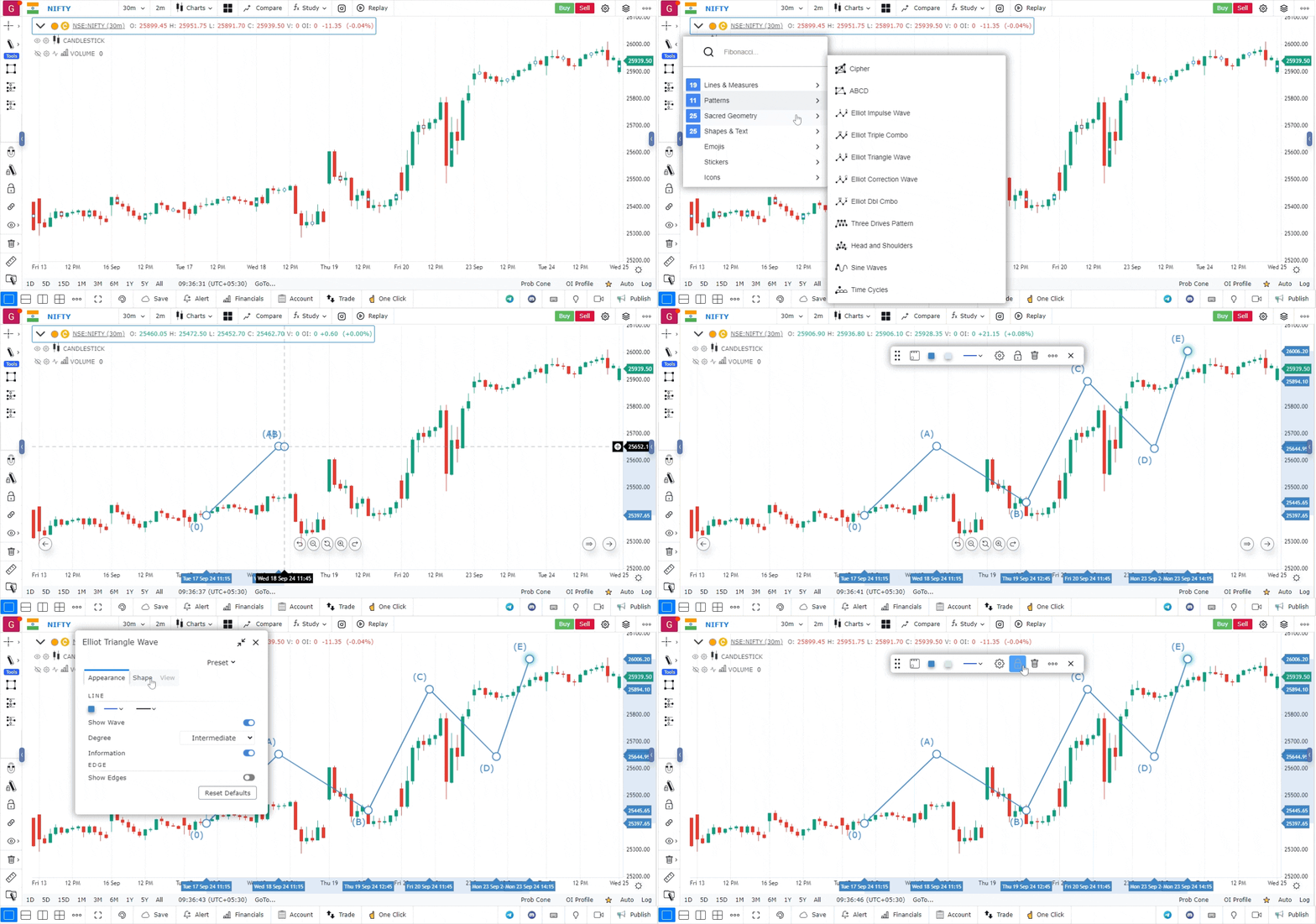
Follow these steps to utilize the Elliott Triangle Wave drawing tool from the patterns section:
-
Access Platform:
- Open the platform and log in to your account.
- Load the chart of the asset you wish to analyze.
-
Select Chart Type:
- Ensure the chart is set to the Candlestick type to provide a clear view of price movements.
-
Navigate to Drawing Tools:
- Locate the Drawing Tools section on the platform interface, usually available on the toolbar or sidebar.
- Click on the drawing tools icon to expand the list of available tools.
-
Open the Patterns Section:
- Within the drawing tools menu, find the Patterns section, where you will see various pattern drawing tools.
- This section includes a variety of technical patterns, including those specific to Elliott Wave Theory.
-
Select the Elliott Triangle Tool:
- Choose the Elliott Triangle Wave tool from the patterns list.
- This tool allows you to plot the five-wave structure (A-B-C-D-E) of the triangle on your chart.
-
Plot the Elliott Triangle Waves:
- Start by clicking on the chart to mark the beginning of Wave A.
- Continue to plot each wave in sequence, labeling them as A, B, C, D, and E.
- The tool will help you draw the converging lines that represent the boundaries of the triangle.
-
Adjust the Wave Labels:
- Modify the position of each wave point to accurately fit the market’s price action.
- Ensure that the triangle’s trendlines show a clear converging pattern as they approach the apex.
-
Analyze the Pattern:
- Study the pattern to determine the breakout direction. Triangles generally indicate a continuation of the previous trend, but they can also lead to reversals in some cases.
- Watch for a breakout of the price beyond the triangle’s boundaries to identify potential trading opportunities.
Use Case
The Elliott Triangle wave is a five-legged (A-B-C-D-E) corrective pattern that consolidates price within converging boundaries. The breakout from the triangle is typically in the direction of the prior trend and can be an explosive move.
Strategy
Identify the converging boundaries of the triangle using the Elliott Triangle Wave tool. Wait for the E wave to complete near the apex. Enter in the direction of the prior trend as price breaks out from the E wave, with a stop inside the triangle. Target the height of the widest part of the triangle projected from the breakout point.
Common Mistakes
Do not trade the triangle breakout against the prior trend direction. Avoid entering before the E wave clearly shows exhaustion. Do not use Elliott Triangle patterns on very short timeframes where noise creates false triangle formations.