Orderbook
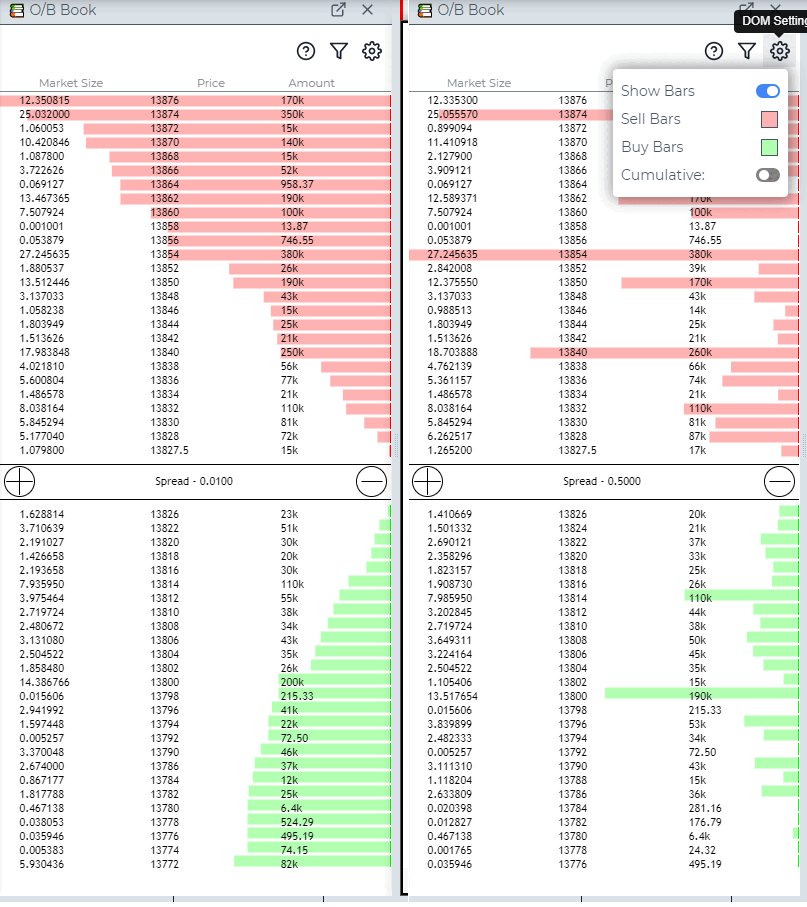
The Orderbook provides a stacked tabular view of all the bids and asks. The default view cumulates the bids and asks at every price level defined by the the aggregation button + and – in the center of the panel.
Another interesting concept that we can view on the Orderbook is Spread and Top of the Book
The highest bid and the lowest ask are referred to as the top of the book. They are interesting because they signal the prevalent market and the bid and ask price that would be needed to get an order fulfilled
Spread = Best Bid Price – Best Ask Price
The Orderbook provides the following information in a tabular format for every bid and ask aggregated at a given price level
- Price
- Quantity
- Amount = Price X Quantity
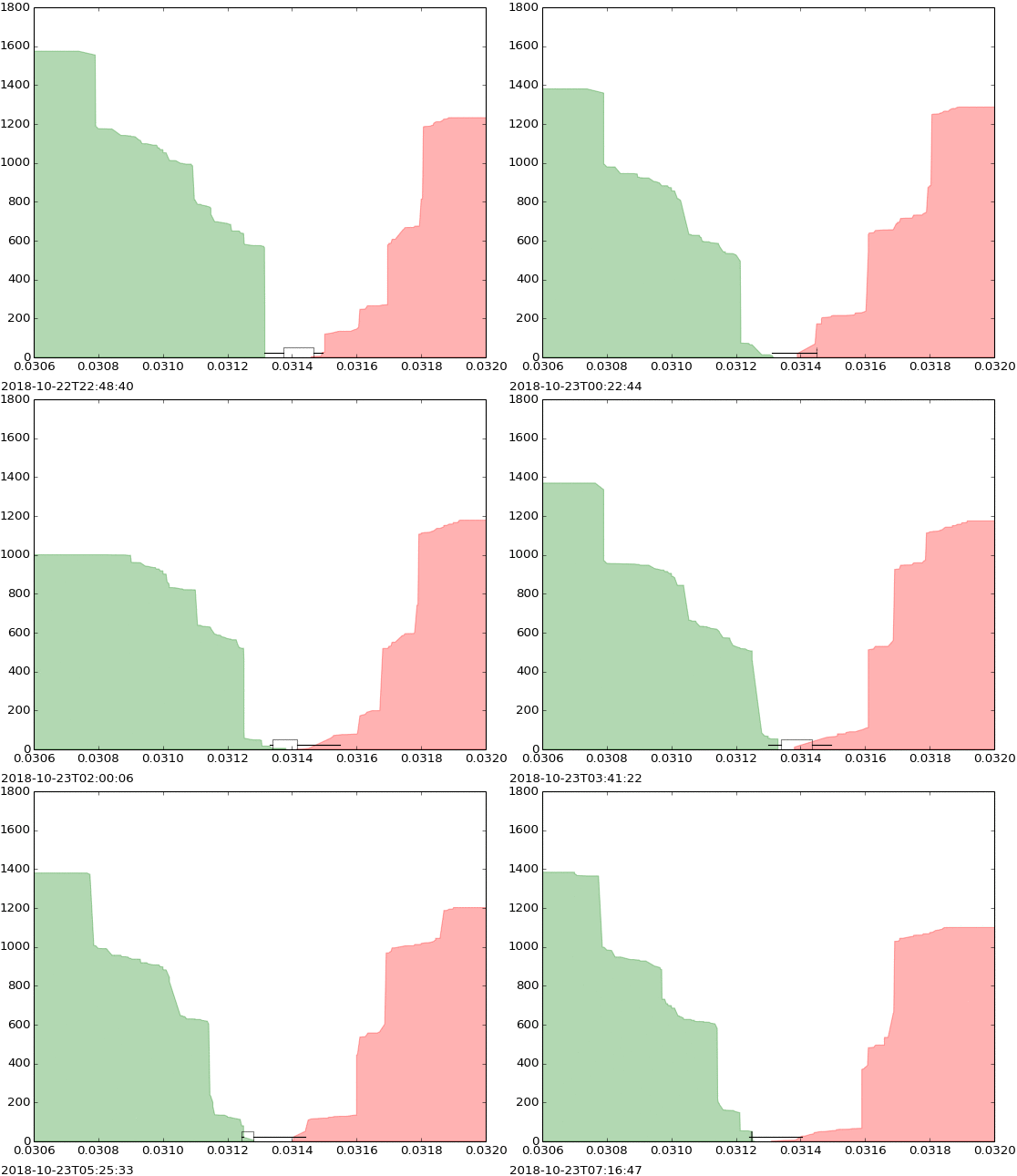
A standard typical Orderbook looks like below where the price is on the X-Axis and the y-axis is cumulative order depth. Bids (buyers) on the left, asks (sellers) on the right.
The GoCharting Orderbook repesents the same information in a slightly different format. The RED bars indicate cumulative (left image) and non-cumulative (right image) asks whereas the GREEN bars indicate the cumulative (left image) and non-cumulative (right image) bids
Can we plot the bids and asks on the price chart
Yes, it is possible in GoCharting. Please see the video below
Use Case
GoCharting’s Order Book displays the resting buy and sell orders at each price level, providing insight into where liquidity is concentrated and where large institutional participants may be placing orders.
Strategy
Use the Order Book to identify large resting orders (institutional iceberg orders or limit orders) at round number price levels. When a large resting bid is at a key support level, it signals institutional interest — consider entering long above the level with a stop just below the large bid.
Common Mistakes
Do not assume large order book positions are static — they are frequently pulled and replaced to mislead retail traders. Avoid making trading decisions based solely on order book readings without chart structure context. Do not use order book data without understanding the specific market microstructure of each instrument.