Price Oscillator (PO) Indicator
The Price Oscillator (PO) is a technical indicator that measures the difference between two moving averages of an asset’s price. It helps traders identify the strength and direction of a trend, as well as potential reversal points. The Price Oscillator provides insights into price momentum by highlighting the relationship between short-term and long-term price movements.
Overview of the Price Oscillator Indicator
- Purpose: The PO aims to identify the trend’s strength and direction by analyzing the difference between two moving averages, making it easier for traders to spot potential buy or sell signals.
- Market Analysis: The PO is particularly useful in trending markets, where it can indicate whether the current price movement is strong enough to continue or if a reversal is likely.
Key Features of the Price Oscillator Indicator
- Moving Average Difference:
- The Price Oscillator calculates the difference between a shorter-term moving average and a longer-term moving average, providing a clear view of price momentum.
- The most commonly used moving averages are the 12-period and 26-period moving averages, but these can be adjusted based on trading preferences.
- Trend Identification:
- A positive Price Oscillator indicates that the short-term moving average is above the long-term moving average, suggesting a bullish trend.
- A negative Price Oscillator indicates that the short-term moving average is below the long-term moving average, suggesting a bearish trend.
- Zero Line Crossover:
- The PO crosses above the zero line to signal a potential buying opportunity, while a crossover below the zero line indicates a potential selling opportunity.
How to Use the Price Oscillator
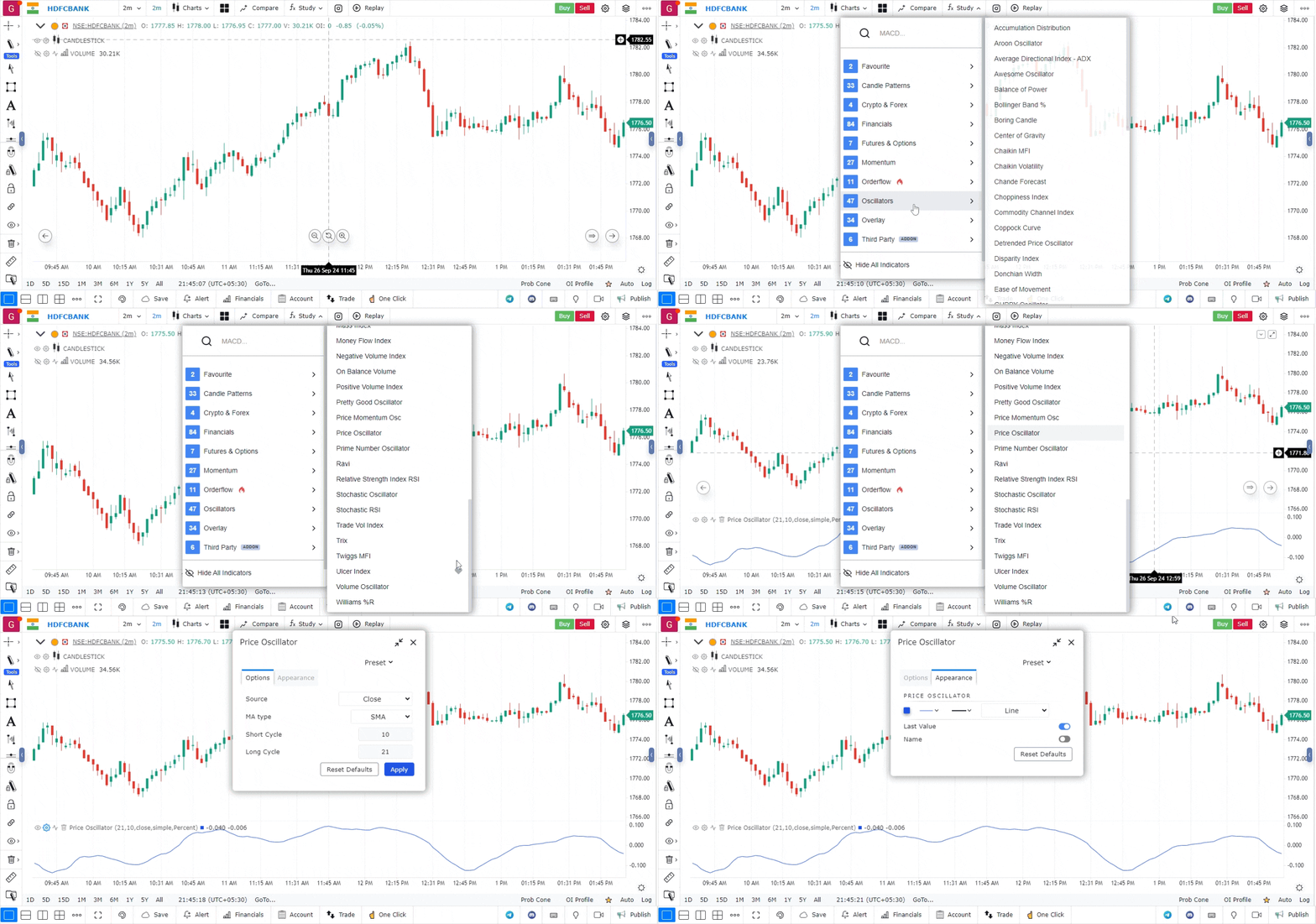
- Open the platform
- Log in: Go to the platform and log into your account.
- Load the Chart: Select the chart for the asset or financial instrument you wish to analyze.
- Access the Indicators Section
- Click on the “Indicators” or “Studies” option located at the top of the chart.
- Expand the list of available indicators and technical studies.
- Find and Add the Price Oscillator (PO)
- Search for PO: Enter “Price Oscillator” or “PO” in the search bar of the indicators list.
- Add the Indicator: Click on the Price Oscillator to add it to your chart. It will appear as a line graph in a separate panel below the main price chart.
- Customize the Price Oscillator
- Settings: Access the settings by right-clicking on the PO line or clicking on the settings icon.
- Adjust the parameters for the moving averages, including the periods for both the short-term and long-term averages.
- Modify the line color, style, and thickness according to your preferences.
- Interpret the Price Oscillator Signals
- Buy Signals: When the Price Oscillator crosses above the zero line, it can indicate a potential buying opportunity, suggesting that the short-term momentum is strengthening.
- Sell Signals: When the Price Oscillator crosses below the zero line, it may signal a selling opportunity, indicating that the short-term momentum is weakening.
- Trend Confirmation: A consistently positive PO reinforces a bullish trend, while a consistently negative PO reinforces a bearish trend.
- Make Trading Decisions Using the Price Oscillator
- Trend Following: Use the PO to confirm the direction and strength of a trend. A rising PO in a bullish market can validate the strength of the uptrend.
- Divergence Analysis: Look for divergences between the PO and price action. If the price is making new highs but the PO is not following suit, this could indicate a weakening trend.
Use Case
The Price Oscillator (PPO) measures the percentage difference between two moving averages, similar to MACD but expressed as a percentage. This makes it more useful for comparing signals across securities with different price levels.
Strategy
Enter long when the PPO histogram turns from negative to positive. Use a 12/26 period setting. Look for PPO divergence with price for high-probability reversal setups.
Common Mistakes
Do not confuse PPO with MACD. Avoid using the same PPO parameters across instruments of very different price levels. Do not trade PPO crossovers without checking whether the broader trend supports the signal direction.