Exponential Moving Average (EMA)
The Exponential Moving Average (EMA) is a widely used technical analysis indicator that helps traders identify trends by smoothing out price data. Unlike the Simple Moving Average (SMA), the EMA gives more weight to recent prices, making it more responsive to new information. You can easily implement the EMA to analyse price trends. Below is a detailed overview of the EMA and how to use it.
What is Exponential Moving Average (EMA)?
The Exponential Moving Average is a type of weighted moving average that reacts more quickly to price changes than the simple moving average. It is calculated using a formula that places greater importance on more recent price data.
EMA Formula
The formula for calculating the EMA is as follows:
Where:
- = Exponential Moving Average at time
- = Price at time
- = Number of periods
- = Smoothing factor, calculated as
How to Add EMA
-
Open the platform:
- Go to the platform and select the asset you want to analyse.
-
Add EMA Indicator:
- Click on the Indicators menu in the top toolbar.
- Search for “Exponential Moving Average” in the search bar.
- Click on the EMA indicator to add it to your chart.
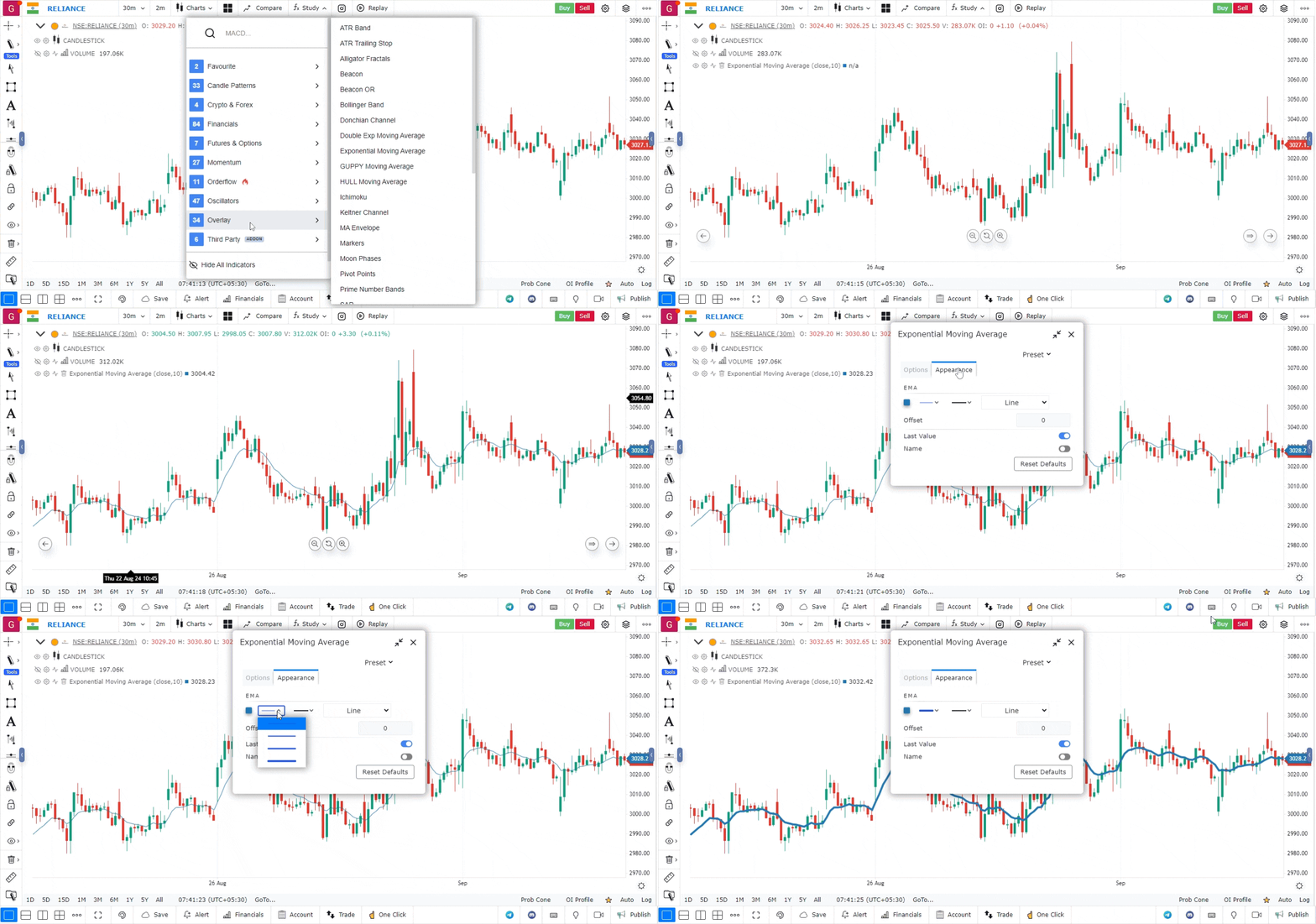
- Configure Settings:
- You can customize the settings based on your trading strategy. Common settings include:
- Period: The number of periods to use for the EMA calculation (e.g., 10, 20, 50, 200).
- Colour and Line Style: Customize the appearance of the EMA line for better visibility on your chart.
- You can customize the settings based on your trading strategy. Common settings include:
How to Interpret EMA
-
Trend Identification:
- An upward-sloping EMA indicates an uptrend, while a downward-sloping EMA suggests a downtrend.
- The steepness of the EMA line can also indicate the strength of the trend.
-
Buy and Sell Signals:
- Buy Signal: When the price crosses above the EMA, it may indicate a buying opportunity.
- Sell Signal: When the price crosses below the EMA, it may suggest a selling opportunity.
-
Crossover Strategies:
- You can use the EMA in combination with another moving average (like SMA or another EMA) to identify potential crossover signals.
- A buy signal is generated when a shorter-term EMA crosses above a longer-term EMA, and a sell signal occurs when it crosses below.
Use Case
The Exponential Moving Average (EMA) gives more weight to recent price data than a Simple Moving Average, making it more responsive to current market conditions. It is the most widely used trend filter and dynamic support/resistance tool.
Strategy
Use the 21 EMA as dynamic support in an uptrend: buy pullbacks when price touches the 21 EMA and a reversal candle forms. For crossover strategies, use a 9 EMA and 21 EMA: enter long on the 9/21 bullish crossover and exit on the bearish crossover.
Common Mistakes
Do not use EMA crossovers in sideways markets — they generate excessive false signals. Avoid relying on a single EMA period; use multiple EMAs to gauge trend alignment. Do not treat EMA as support in a downtrend.