Ease of Movement
The Ease of Movement (EOM) indicator is a technical analysis tool that measures the relationship between price change and volume change. It helps traders identify the strength of price movements, making it particularly useful for assessing whether a market is trending or consolidating. The Ease of Movement indicator provides insights into how easily prices can move in relation to volume, which can be helpful in forecasting potential price movements.
Overview of Ease of Movement
The Ease of Movement indicator is calculated using the formula:
Where:
- : Current High Price.
- : Current Low Price.
- : Previous Close price.
- : Current Volume.
This formula highlights how much price is moving relative to the volume, indicating whether the movement is strong or weak. Positive EOM values suggest that price movements are occurring with relatively low volume, while negative values indicate that price movements are occurring with higher volume.
Key Features of Ease of Movement
- Trend Strength: The EOM helps traders assess the strength of a price trend, providing insight into whether a market is bullish or bearish.
- Volume Relationship: By considering volume in the calculation, the EOM provides a more nuanced view of price movements compared to price alone.
- Customizable Settings: Traders can adjust the periods used in the EOM calculation to tailor it to their trading strategies.
How to Use Ease of Movement
- Open the platform:
- Log in to your account.
- Load the chart for the asset you want to analyze.
- Select the Timeframe:
- Choose a suitable timeframe that fits your trading style (e.g., daily, hourly).
- Add the Ease of Movement Indicator:
- Go to the Indicators section in the platform interface.
- Search for Ease of Movement.
- Click to add the indicator to your chart, which will typically appear as a line plotted below the price chart.
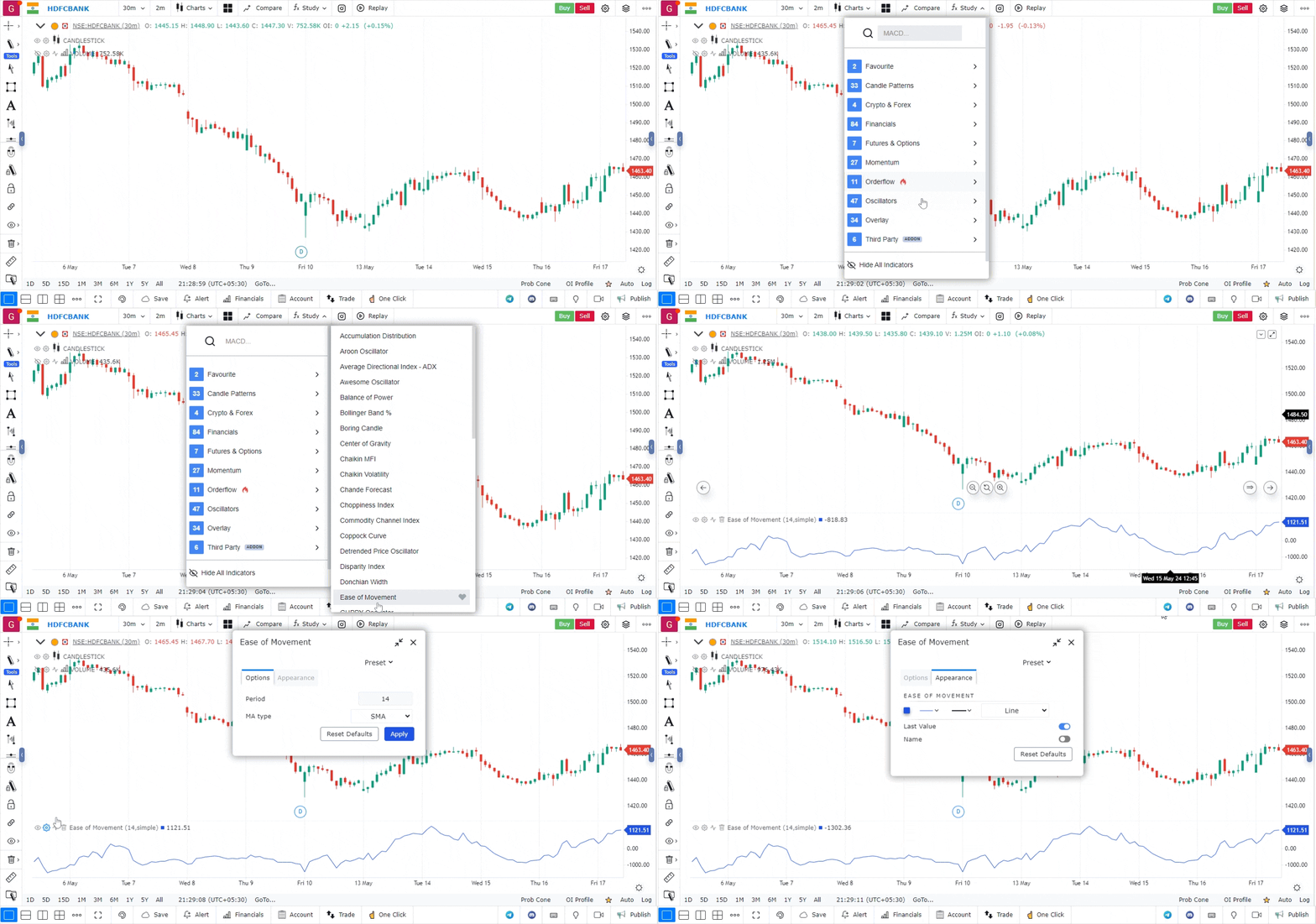
- Interpret the Indicator:
- The Ease of Movement will display as a line oscillating above and below the zero line.
- Positive values indicate that price is moving upward with ease, while negative values suggest difficulty in upward movement (or downward ease).
- Make Trading Decisions:
- Buy Signal: When the EOM is above zero and rising, it may suggest a strong bullish trend, indicating a potential buying opportunity.
- Sell Signal: Conversely, when the EOM is below zero and falling, it may indicate a bearish trend, suggesting a potential selling opportunity.
- Combine with Other Indicators:
- Use the Ease of Movement alongside other technical indicators (like moving averages, RSI, or MACD) for better confirmation of trading signals.
Use Case
Ease of Movement (EOM) relates price change to volume, identifying how easily price moves in a given direction. High positive values indicate price rising on low volume; high negative values indicate price falling easily.
Strategy
Enter long when EOM rises above zero with price breaking above resistance, indicating the move is happening with minimal selling pressure. Smooth EOM with a 14-period SMA to reduce noise. Exit when EOM returns to zero or crosses negative.
Common Mistakes
Do not trade EOM signals during low-volume market hours. Avoid using raw EOM without smoothing. Use it as a filter rather than a primary entry signal.