Head and Shoulders Pattern
The Head and Shoulders Pattern is a classic chart formation that signals a potential reversal in trend, primarily from bullish to bearish. This pattern consists of three peaks: a higher peak (the head) between two lower peaks (the shoulders). The inverse version, known as the Inverse Head and Shoulders, signals a bullish reversal.
Components of the Head and Shoulders Pattern
- Left Shoulder: The price rises to a peak and then declines to a trough.
- Head: The price rises again to a higher peak, followed by a decline to a trough.
- Right Shoulder: The price rises to a peak similar to the left shoulder and then declines again.
- Neckline: A support line that connects the troughs (the lows) of the pattern. A breakout below this line confirms the pattern.
Steps to Use the Head and Shoulders Pattern Tool
-
Open the Platform:
- Log in to your account.
- Load the chart for the asset you want to analyze by entering the ticker symbol.
-
Choose Chart Type and Timeframe:
- Set your chart type to Candlestick for clear visualization.
- Select a suitable timeframe (e.g., daily, weekly) for better pattern identification.
-
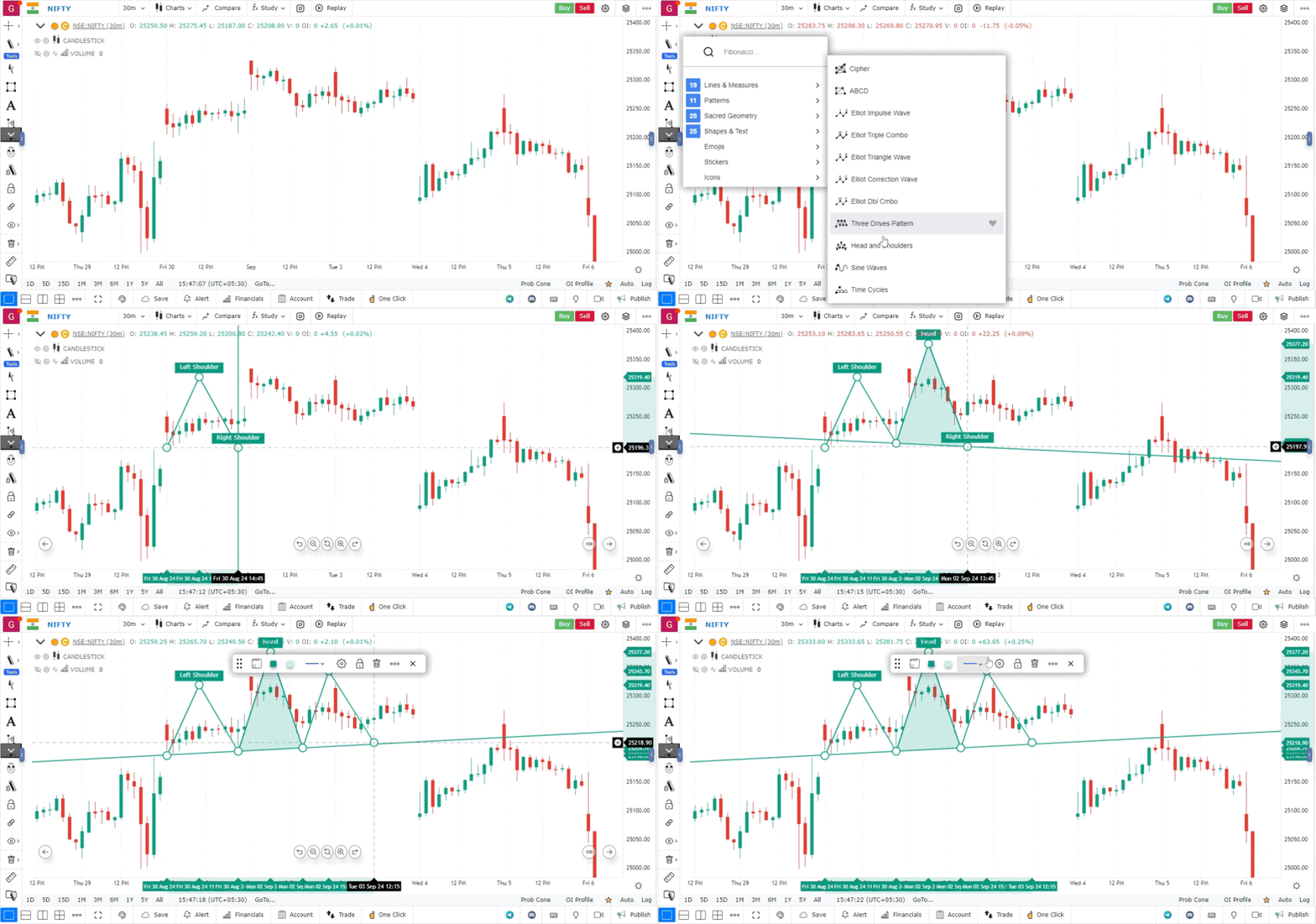
Access the Drawing Tools:
- Click on the Drawing Tools panel in the chart interface.
- Navigate to the section that includes pattern tools.
-
Locate the Head and Shoulders Tool:
- Find the Head and Shoulders pattern tool within the drawing tools.
- This tool allows you to easily mark the components of the pattern.
-
Plotting the Pattern:
- Click on the chart to mark the Left Shoulder.
- Continue to mark the Head and the Right Shoulder.
- Draw the Neckline by connecting the troughs of the pattern.
-
Labeling and Customization:
- Optionally, label the components (Left Shoulder, Head, Right Shoulder) for clarity.
- Customize the appearance of the pattern by adjusting colors and line styles as needed.
Analyzing the Head and Shoulders Pattern
-
Pattern Validation:
- Ensure the peaks and troughs align with the expected structure of a head and shoulders pattern.
- The neckline should slope downward in a standard head and shoulders pattern.
-
Volume Confirmation:
- Look for volume patterns: volume typically increases during the formation of the left shoulder and the head but may decrease during the formation of the right shoulder.
- A significant increase in volume at the breakout below the neckline is a strong confirmation of the pattern.
-
Trading Signals:
- A break below the neckline confirms the bearish reversal signal, and traders can consider entering short positions.
- Set stop-loss orders above the right shoulder to manage risk.
Benefits of Using the Head and Shoulders Pattern Tool
- User-Friendly: The platform’s interface makes it easy to plot and analyze complex patterns.
- Real-Time Analysis: Access live market data to identify patterns and make timely decisions.
- Visual Clarity: The tool helps visualize the head and shoulders formation clearly, aiding in analysis.
Use Case
The Head and Shoulders pattern is one of the most reliable classical chart patterns, consisting of three peaks with the middle peak (head) higher than the two surrounding peaks (shoulders). The neckline break signals a trend reversal.
Strategy
Enter short when price closes below the neckline after the right shoulder forms. Set stops above the right shoulder’s high. Project the target by measuring the distance from the neckline to the head and subtracting from the neckline breakout point.
Common Mistakes
Do not trade Head and Shoulders patterns if the neckline is not clearly defined. Avoid shorting on the neckline touch without a daily close below it. Do not ignore that inverse Head and Shoulders patterns at lows are equally powerful bullish reversal setups.