Guppy Multiple Moving Average (GMMA)
The Guppy Multiple Moving Average (GMMA) is a technical analysis tool designed to identify trends and potential reversals in price action. Developed by trader Daryl Guppy, the GMMA uses multiple moving averages to analyse market behaviour and improve trading decisions. You can easily implement the GMMA to gain insights into price trends. Below is a detailed overview of the Guppy Moving Average and how to use it.
What is Guppy Moving Average (GMMA)?
The Guppy Multiple Moving Average consists of two groups of exponential moving averages (EMAs):
- Short-Term EMAs: Aimed at capturing the short-term price trends. Typically, these are 3, 5, 8, 10, 12, and 15 periods.
- Long-Term EMAs: Focused on identifying long-term trends. These usually include 30, 35, 40, 45, 50, and 60 periods.
How to Add GMMA
-
Open the platform:
- Navigate to the platform and select the asset you wish to analyze.
-
Add GMMA Indicator:
- Click on the Indicators menu in the top toolbar.
- Search for “Guppy Moving Average” in the search bar.
- Click on the GMMA indicator to add it to your chart.
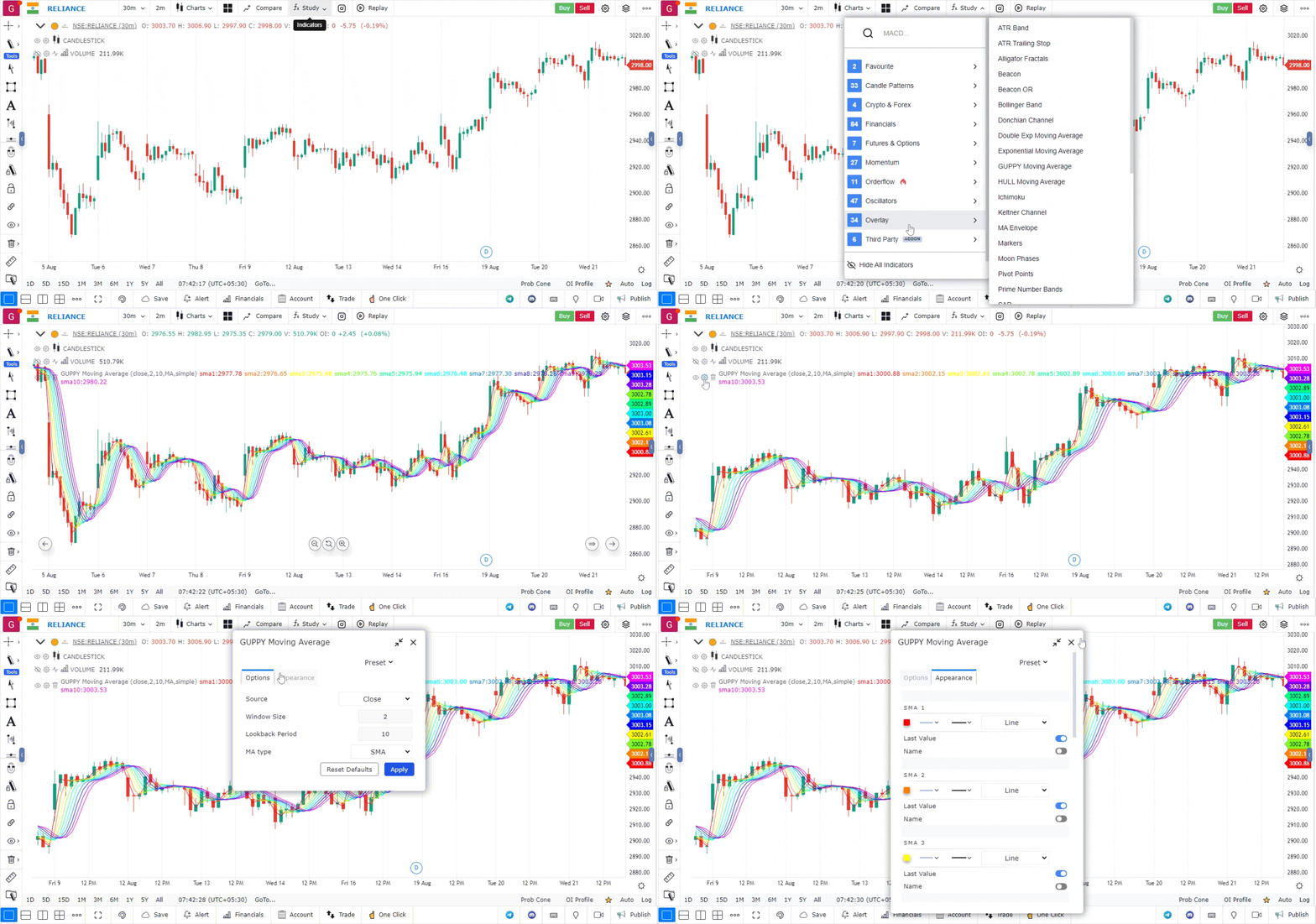
- Configure Settings:
- You can customize the settings based on your trading preferences. Common settings include:
- Short-Term Periods: 3, 5, 8, 10, 12, 15.
- Long-Term Periods: 30, 35, 40, 45, 50, 60.
- Colour and Line Style: Adjust the colours and styles of the EMAs for better visibility and differentiation between short-term and long-term averages.
- You can customize the settings based on your trading preferences. Common settings include:
How to Interpret GMMA
-
Trend Identification:
- When the short-term EMAs are above the long-term EMAs, it indicates a bullish trend.
- Conversely, if the short-term EMAs are below the long-term EMAs, it signifies a bearish trend.
-
Crossover Signals:
- Buy Signal: A buy signal may occur when the short-term EMAs cross above the long-term EMAs, indicating a potential trend reversal or strengthening uptrend.
- Sell Signal: A sell signal can be indicated when the short-term EMAs cross below the long-term EMAs, suggesting a potential trend reversal or strengthening downtrend.
-
Trend Strength and Weakness:
- The distance between the short-term and long-term EMAs can provide insights into the strength of the trend. A wider gap indicates a strong trend, while a narrow gap may signal weakening momentum.
Use Case
The Guppy Multiple Moving Average (GMMA) uses two groups of EMAs (short-term: 3,5,8,10,12,15 and long-term: 30,35,40,45,50,60) to visualise the relationship between short-term traders and long-term investors in the market.
Strategy
Enter long when the short-term EMA group crosses above the long-term group and both groups are fanning out upward. Exit when the short-term group crosses back below the long-term group. When the two groups compress together, a major trend change is likely.
Common Mistakes
Do not enter when both groups are compressed or intertwined. Avoid using GMMA without observing the separation of both groups; a crossover with no separation is not a strong signal. Do not use GMMA alone for entry timing; combine with a price structure entry trigger.